


Editorial
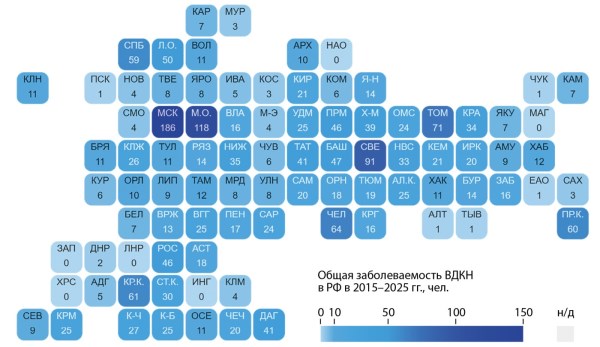
Neonatal screening for congenital adrenal hyperplasia (CAH) has been conducted in Russia since 2006. An analysis of results from 2015–2025, covering 15,546,274 newborns, identified 1,871 children with classic forms of 21-hydroxylase deficiency. The average detection rate was 1:8,309 (0.012% or 1,20 per 10 000 per year) with annual variations ranging from 1.03 to 1.48 per 10,000 newborns per year. Significant interregional variability in incidence was observed, with the highest rates recorded in the Karachay-Cherkess Republic (6.16/10,000 per year), Leningrad Oblast (4.04/10,000 per year), and Primorsky Krai (3.07/10,000 per year). Among federal districts, the Urals Federal District ranked highest. The timing of diagnosis leads to critical differences in outcomes, including the risk for adrenal crisis. Newborn screening confirms its high efficiency, and the identified regional variations underscore the need for further population genetic studies to optimize medical genetic counseling.
Clinical endocrinology
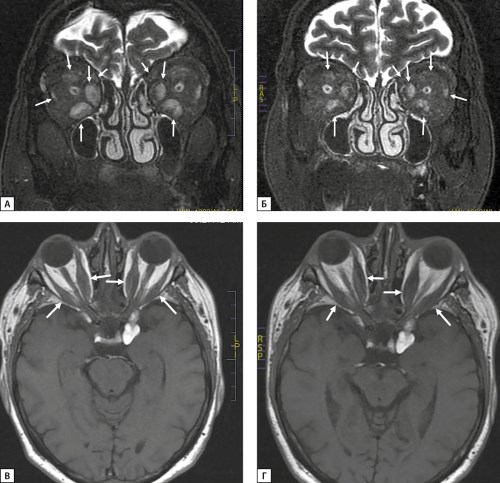
Graves’ orbitopathy (GO) is a progressive autoimmune disorder of visual organ, mostly associated with Graves’ disease (GD). Although rituximab has been used as an off-label therapy for steroid-resistant GO, paradoxical immune reactivation has also been reported. We present a rare case of GO that developed after bendamustine-rituximab (BR) therapy for chronic lymphocytic leukemia (CLL). A 73-year-old male with a 3-year history of GD, presented with new onset of bilateral proptosis, diplopia, and decreased visual acuity, that happened two weeks after his second BR cycle for CLL. The anamnesis was negative for both smoking, and radioiodine therapy. Laboratory studies showed persistently elevated thyrotropin receptor antibodies levels in plasma, and extraocular muscle enlargement on orbital MRI. The active phase (CAS 6/6) of moderate-to-severe (EUGOGO) GO was diagnosed. Despite two courses of intravenous methylprednisolone (cumulative dose — 12.2 g) and 10 retrobulbar dexamethasone injections, the patient progressed to dysthyroid optic neuropathy. Although the patient had a predisposing autoimmune background, the close temporal association with BR therapy, progressive disease course, and glucocorticoid resistance suggest that chemotherapy-induced immune dysregulation played a critical role in triggering GO. Rituximab-related B-cell depletion and cytokine release syndrome may have facilitated T-cell–mediated orbital inflammation, while bendamustine-induced lymphopenia further disrupted immune tolerance. This case illustrates the potential for paradoxical autoimmune activation following BR therapy in a predisposed patient. Clinicians should monitor for GO signs, and symptoms before, during, and after BR therapy in patients with underlying thyroid autoimmunity. Further clinical trials are needed to verify this phenomenon.
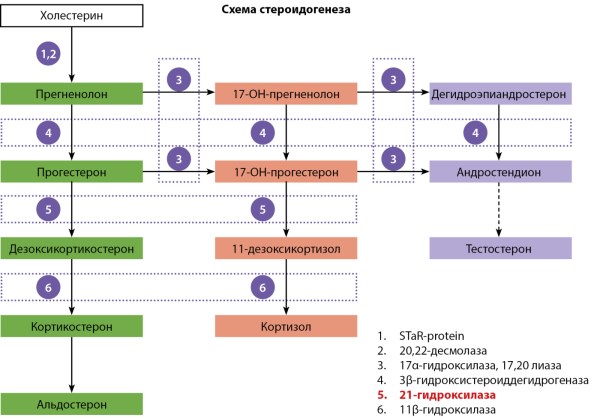
Congenital Adrenal Hyperplasia (CAH) is a group of diseases with an autosomal recessive inheritance pattern, which are caused by a defect in the enzymes involved in steroidogenesis in the adrenal cortex. Depending on the enzyme block variant, the spectrum of clinical manifestations of CAH varies from mild symptoms to potentially fatal disorders. The review provides a detailed analysis of the six main forms of CAH (lipoid hyperplasia, HSD3B2, CYP17A1, CYP21A2, CYP11B1, POR) with an in-depth description of their molecular basis, pathogenesis, and clinical and laboratory manifestations. Particular attention is paid to modern methods of genetic diagnosis of CAH, including analysis of the highly homologous CYP21A2 locus, prenatal and preimplantation diagnosis. Not only modern approaches to replacement therapy are described in detail, but also promising methods of treatment: corticotropin-releasing hormone receptor antagonists, gene- and cellbased technologies. The study's strength lies in its comprehensive analysis of the disease, spanning fundamental research to practical patient management, as applied to the realities of clinical practice in Russia.

BACKGROUND: Autoimmune thyroid diseases (AITD) result from immune system dysregulation. Among them are Hashimoto’s thyroiditis, Graves’ disease, etc. Approximately 3% of patients with Hashimoto’s thyroiditis may develop orbitopathy. Thyroid eye disease (TED), is an organ-specific autoimmune reaction that primarily affects the eyes and surrounding tissues. The aim of this case report is to present a rare condition of a female patient who was diagnosed with exophthalmos nine years after being diagnosed with Hashimoto’s thyroiditis.
CASE REPORT: A 45-year-old woman presented to our department with Hashimoto’s thyroiditis and hypothyroidism. Her medical history revealed that she was diagnosed with HT nine years ago and had been receiving L-thyroxine treatment throughout this period. However, her condition remained uncompensated, and in the past year, she developed bilateral exophthalmos as a complication.
CONCLUSION: Exophthalmos is generally more strongly associated with Graves’ disease, a form of hyperthyroidism. However, it can also occur in some patients with Hashimoto’s thyroiditis, although it is less common.
Bones & Adipose tissues diseases
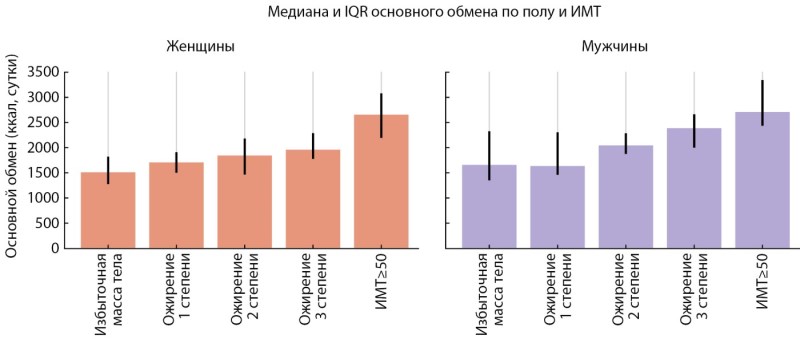
BACKGROUND: Accurate assessment of resting energy expenditure (REE) in patients with overweight and obesity is a key component of personalized dietary planning and physical activity prescription. Although indirect calorimetry (IC) is considered the gold standard for measuring resting energy expenditure, predictive equations are predominantly used in clinical practice, despite their limited and variable accuracy in individuals with obesity. AIM: To compare the accuracy of resting energy expenditure assessment using commonly applied predictive equations and indirect calorimetry in adults with overweight and obesity.
MATERIALS AND METHODS: An open cross-sectional comparative study was conducted in adults with a body mass index (BMI) ≥25 kg/m². Resting energy expenditure (REE) was measured using IC (Cosmed K5) and calculated with eight commonly used predictive equations. Body composition was assessed by bioelectrical impedance analysis InBody770. Accuracy was evaluated using mean absolute error (MAE), mean absolute percentage error (MAPE), root mean square error (RMSE), Pearson correlation coefficient, and Bland–Altman analysis.
RESULTS: The study included 293 patients (111 men and 182 women) with a median (BMI) of 38.3 [32.9; 44.0] kg/m². The median REE measured by IC was 1964.5 [1570.8; 2370.5] kcal/day. All analyzed predictive equations demonstrated substantial individual error, with the mean absolute percentage error exceeding 15% in more than 50% of patients. The smallest mean bias relative to measured values was observed for the Roza–Shizgal, WHO (Schofield), and Harris–Benedict equations; however, even these formulas showed wide limits of agreement in Bland–Altman analysis. The accuracy of all equations declined with increasing age and obesity severity and was lowest in patients with BMI ≥40 and ≥50 kg/m². Equations based on fat-free mass systematically underestimated REE in patients with morbid obesity.
CONCLUSION: None of the commonly used predictive equations provides high individual accuracy for estimating REE in adults with obesity. Even equations with minimal mean bias are characterized by pronounced interindividual variability and reduced accuracy with increasing age and obesity severity. IC remains the most reliable method for determining energy requirements, particularly in patients with severe and morbid obesity.
Carbohidrates metabolism disturbancies
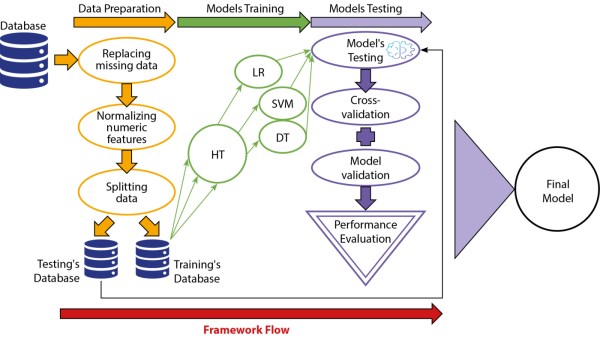
Diabetes is a long-term costly burden that increases the vulnerability of individuals to develop anxiety disorders. Consequently, effective management of diabetes anxiety in diabetics can significantly improve overall patient care. This paper presents a comparative analysis of three machine learning algorithms, namely Logistic Regression (LR), Support Vector Machine (SVM), and Decision Tree (DT), in predicting anxiety among diabetics. A Moroccan dataset was utilized, and a grid search approach was employed for hyperparameters tuning.
The findings demonstrate promising results in terms of the algorithms’ performance. The Decision Tree algorithm exhibited the highest accuracy, achieving an impressive 96% in predicting anxiety among diabetics. SVM followed with an accuracy rate of 69%, while LR achieved 61%. These outcomes provide valuable insights for further research endeavors aimed at refining the prediction models.
In conclusion, the study highlights the potential of machine learning algorithms in predicting anxiety disorders among individuals with diabetes. The high accuracy demonstrated by the Decision Tree model suggests its potential as a reliable tool in clinical settings. Further investigations are warranted to validate these results and explore the applicability of these models in real-world scenarios, ultimately enhancing the management and well-being of individuals with diabetes and comorbid anxiety disorders.
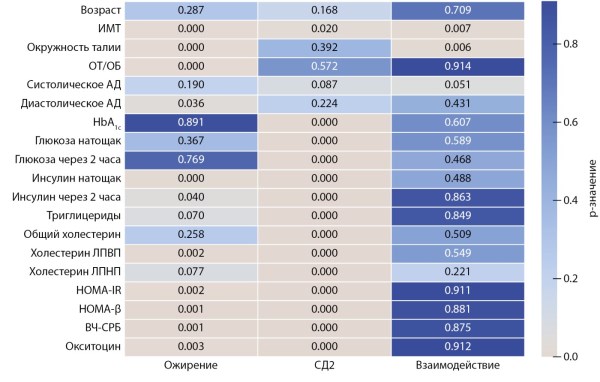
BACKGROUND. Obesity and type 2 diabetes (T2D) are common metabolic disorders. Oxytocin, a hypothalamic neuropeptide, has recently been recognized as a potential regulator of energy balance, appetite, and insulin sensitivity.
OBJECTIVE. To investigate the relationship between circulating oxytocin levels and metabolic parameters in individuals with obesity and newly diagnosed T2D.
MATERIALS AND METHODS. A total of 96 participants were enrolled, including 48 with normal glucose tolerance (NGT) and 48 with newly diagnosed T2D, each subdivided into normal-weight and obese groups. Anthropometric indices, glucose and lipid parameters, insulin, HbA1c, and high-sensitivity C-reactive protein were measured. Insulin resistance and β-cell function were assessed using the HOMA model.
RESULTS. Circulating oxytocin levels were significantly lower in patients with T2D compared to NGT (p < 0.01), and in obese compared to normal-weight participants (p < 0.01). Low oxytocin was negatively correlated with BMI, waist circumference, HbA1c, glucose, insulin, lipids, and hs-CRP, but positively with β-cell function. Multiple regression analysis identified 2-hour glucose, BMI, and total cholesterol as independent predictors of oxytocin levels.
CONCLUSION. Patients with obesity and newly diagnosed T2D exhibit markedly reduced circulating oxytocin levels, associated with adverse metabolic profiles. These findings highlight oxytocin as a potential biomarker of early metabolic dysregulation and suggest new therapeutic perspectives.
Type 2 diabetes mellitus (T2DM), projected to affect 700 million individuals by 2045, may be driven by a hypothesized physiological axis where impaired hepatic insulin clearance, mediated by CEACAM1 endocytosis, links proinsulin misfolding to chronic hyperinsulinemia, exacerbating T2DM, obesity, and non-alcoholic fatty liver disease (NAFLD). Approximately 50–80% of proinsulin, synthesized at ~6000 molecules per second, undergoes 5–10% misfolding due to disrupted disulfide bonds (B7-A7, B19-A20, A6-A11) under endoplasmic reticulum (ER) stress, compounded by glutathione (GSH) depletion, which primarily impairs protein disulfide isomerase (PDI) function critical for insulin synthesis. Hepatic clearance involves CEACAM1 binding, insulin receptor isoform B (IR-B) tyrosine 960 autophosphorylation, AP-2/clathrin/dynamin vesicle formation, Rab5-mediated acidification (pH 5.5), Rab7 trafficking, and lysosomal cathepsin B/D hydrolysis, supported by IR-B–IRS-1 tyrosine 608–PI3K–PDK1–Akt (Ser473)–GSK3β signaling. ER stress activates the unfolded protein response (UPR: IRE1α-XBP1, PERK-eIF2α, ATF6), increasing clearance demand.
When clearance fails, misfolded proinsulin accumulates, driving hyperinsulinemia, which promotes insulin resistance, activates mTORC1–SREBP-1c-mediated lipogenesis and VLDL export, and contributes to NAFLD and obesity, as observed in CEACAM1 knockout models. The Hepatic Insulin Clearance Index (HICI), derived from a 50-g glucose challenge yielding a C-peptide/insulin ratio<1, may diagnose impaired clearance with greater sensitivity than HOMA-IR. Emerging tools, such as cryo-EM and portal vein proteomics, could quantify misfolded aggregates and elucidate NAFLD connections. Potential therapeutic strategies, including CEACAM1 enhancers and IR-B agonists, may target this clearance axis. This hypothesis underscores hepatic insulin clearance as a potential mediator of insulin resistance and its role in diseases linked to chronic hyperinsulinemia.
Pediatric Endocrinology
BACKGROUND: Type 1 diabetes mellitus (T1DM) is a chronic progressive autoimmune disease characterized by destruction of pancreatic betta cells leading to insulin deficiency, measured by C-peptide testing. C-peptide secretion has been studied in diagnostic, prognostic and therapeutic aspects in patients with already manifested T1DM. Insulin secretion assessed by the level of C-peptide at the preclinical stage remains under-studied.
AIM: The aim of the study was to assess the possibility of predicting the development of T1DM in healthy siblings based on dynamic measurements of C-peptide concentration.
MATERIALS AND METHODS: A multicenter prospective longitudinal study involving 532 individuals was conducted. Median follow-up duration was 5.6 years. Group 1 (n=325) included children aged 0–18 years with newly diagnosed T1DM; group 2 (n=201) consisted of healthy brothers and sisters (siblings) who did not develop T1DM until the end of the study; group 3 (n=6) comprised healthy siblings who developed T1DM before the study completion. All participants underwent dynamic testing of blood analysis for C-peptide using solid-phase chemiluminescent immunoassay.
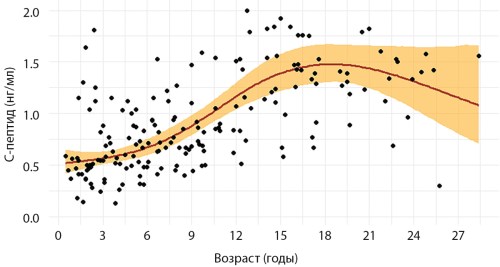
RESULTS: In groups 1 and 3, the actual median concentration of baseline C-peptide was below reference values: 0.31 ng/mL [95% CI 0.10–1.39] and 0.56 ng/mL [95% CI 0.32–0.85], respectively. In group 2, it corresponded to the lower limit of reference values: 0.88 ng/mL [95% CI 0.28–2.69]. The observed differences were statistically significant between groups 1 and 2 (χ2 =168.29, df=1, p < 0.001) and between groups 2 and 3 (χ2 =4.2292, df=1, p=0.040). Regression modeling revealed a nonlinear positive relationship between C-peptide concentration and age. At any age category, the median initial C-peptide concentration in groups 1 and 3 was lower than that in group 2 above the average level ("intercept") characteristic for the cohort of specific age. The association between C-peptide concentration and time since observation onset was statistically significant (p < 0.05) and bidirectional: over time, concentrations decreased in groups 1 and 3 and increased in group 2.
CONCLUSION: Measurement of baseline C-peptide levels followed by dynamic monitoring may serve as an additional screening tool for predicting the risk of T1DM development in healthy siblings.
BACKGROUND: Hypoparathyroidism (HypoPT) and pseudohypoparathyroidism (PHP) are rare, predominantly genetically determined diseases in children with similar complications, characterized by hypocalcemia and hyperphosphatemia. PHP and HypoPT have similar complications: brain and lens calcification. In HypoPT, there is also an increased risk of developing nephrocalcinosis. Data on the frequency and structure of complications in affected children in Russia are limited, and comparative studies are lacking.
AIM: To compare the prevalence of chronic complications and to identify factors associated with their development in children with PHP and congenital forms of HypoPT.
MATERIALS AND METHODS: A retrospective study with a prospective component included 135 children with PHP and congenital forms of HypoPT. The results of laboratory and instrumental studies were evaluated.
RESULTS: At least one complication associated with HypoPT/PHP was identified in 82% of children. Nephrocalcinosis was most frequently detected in patients with autoimmune polyendocrine syndrome type 1 (APS-1) (67%) and autosomal dominant hypocalcemia type 1 (ADH1), and much less often in patients with PHP (22%) and unspecified forms of HypoPT (18%). Disease duration, as well as the duration of therapy with active vitamin D analogs and calcium supplements, was significantly longer in patients with nephrocalcinosis (p < 0.001). An association between nephrocalcinosis and cataracts was established (p=0.005). Hypercalciuria persisted in 60% of patients despite medical compensation, was most prevalent in APS-1 and ADH1, and was not observed in PHP (p < 0.001). No statistically significant relationship was identified between hypercalciuria and the development of nephrocalcinosis (p=0.567). A decrease in eGFR corresponding to CKD stage 2 was observed in 48.9% of patients. Fahr’s syndrome was detected in 76% of cases, predominantly involving the basal ganglia, and the presence of mineral deposits was associated with hyperphosphatemia (p=0.010). Cataract and micronephrolithiasis were less frequent (18.6% and 3.9%, respectively), with no significant differences between nosological groups. The most common lens opacities observed were cortical (68%) and posterior subcapsular (41%). The duration of the disease was longer in patients with cataracts (p = 0.018).
CONCLUSION: Among the complications observed in children, nephrocalcinosis, hypercalciuria, and Fahr’s syndrome were the most frequent. Renal complications predominated in patients with APS-1 and ADH1. Hypercalciuria persisted despite optimal serum calcium levels in most patients.
Reproductive Endocrinology
BACKGROUND: The paradigm of combined treatment for differentiated thyroid cancer has been in use since the mid-20th century. This approach involves thyroidectomy, followed by radioactive iodine therapy, and after patients may be prescribed suppressive therapy. Combined treatment improves outcomes, particularly in cases of high risk of recurrence. However, it can also lead to a range of secondary complications, including those affecting the reproductive system.
AIM: Assessment and comparative analysis of ovarian function and ovarian reserve (OR) using anti-Müllerian hormone (AMH), follicle-stimulating hormone (FSH), luteinizing hormone (LH), prolactin (PRL), estradiol (E2) and estrone (E1) in the early follicular phase in women of reproductive age who received combined treatment for DTC, and in healthy women of the same age.
MATERIALS AND METHODS. In a single-center, comparative cross-sectional study, clinical and morphological, anamnestic and laboratory parameters were analyzed in patients who underwent thyroidectomy and one course of radioiodine therapy for DTC, and in healthy women.
RESULTS: The study enrolled 90 women aged 18 to 40 years: 67 women with DTC with a median age of 31 years [26; 36] who underwent combined treatment, and 30 healthy women with a median age of 30 years [28; 35]. The frequency of menstrual cycle disorders over the past year was 33% in women with DPT and 13% in healthy women.
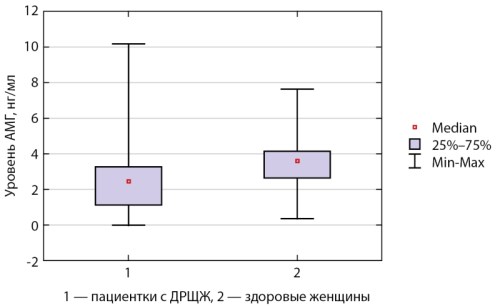
When comparing the results of hormonal examination, it was revealed that the levels of FSH, LH, PRL, E1 and E2 did not differ significantly between the groups. The level of AMH was the only parameter that significantly differed in patients with DTC receiving combined treatment and in healthy women — 2.49 ng/ml [1.1; 3.3] and 3.6 ng/ml [2.62; 4.18], respectively (P < 0.004). In 18 (27%) patients with DTC, the level of AMH was < 1.2 ng/ml, in the group of healthy women low level of AMH was found only in one case. Only patient's age at the time of RAIT and age at the time of examination on the background of thyroid stimulating hormone suppression were associated with diminished ovarian reserve, using the Juden index, the cut-off points of 31 years and 33 years were determined, respectively.
CONCLUSION. The level of AMH in patients with DTC who undergo combined treatment is significantly lower compared to healthy women of the same age. Only patient's age at the time of RAIT and age at the time of examination on the background of thyroid stimulating hormone suppression were associated with diminished ovarian reserve.
In recent decades, the Russian government has been committed to improving the country's demographic situation. Therefore, obstetricians and gynecologists pay special attention to women of reproductive age, whose reproductive system disorders can lead to infertility and the inability to conceive. Menstrual cycle disorders (MCDs) are a manifestation of various pathological conditions associated not only with disorders of the female reproductive system but also with general systemic and endocrine diseases. Since the 1980s, the incidence of MCDs has increased more than sevenfold. MCDs are characterized by changes in the cycle frequency, duration, and volume of menstrual blood loss. An obstetrician/gynecologist who initially consults a woman of reproductive age with MCDs should not only develop an examination plan for the patient, but most importantly, collect a detailed medical history, including a description of her physical condition, sports history, dietary habits, medication intake, including vitamins and dietary supplements, and analyze the relationship between MCDs and epigenetic factors in the woman's life. The incidence of NMC in the presence of an endocrine disease is up to 35% and requires referral of the patient to an endocrinologist to compensate for the endocrinopathy.
Jubilee greetings


This work is licensed under a Creative Commons Attribution-NonCommercial-NoDerivatives 4.0 International License (CC BY-NC-ND 4.0).
ISSN 2308-1430 (Online)





.jpg)


